Ice caves and glacier hikes
The biggest single activity in these grounds by a distance: blue ice tours on Sólheimajökull and Vatnajökull, and the winter ice caves under Katla and Breiðamerkurjökull. Crampons on, guide in front, no experience needed.

64° 08′ N · 21° 56′ W · South coast cliffs to the rift valley · Ground 11
Three hundred and forty metres of cliff.
And the ground here is hollow.
Iceland is the one place where the drop goes both ways. You can step off a tuff mountain above the black sand at Vík, and you can be lowered a hundred and twenty metres into a volcano that stopped erupting four thousand years ago. In between there is a kilometre of steel cable and, at the bottom, a crack between two continents filled with water you can drink. Scrolling means falling. Every stop comes with real prices and an honest rating of how hard your heart will pound.

Stop 1 · Tandem paragliding · Reynisfjall, Vík
340M OF MOUNTAIN
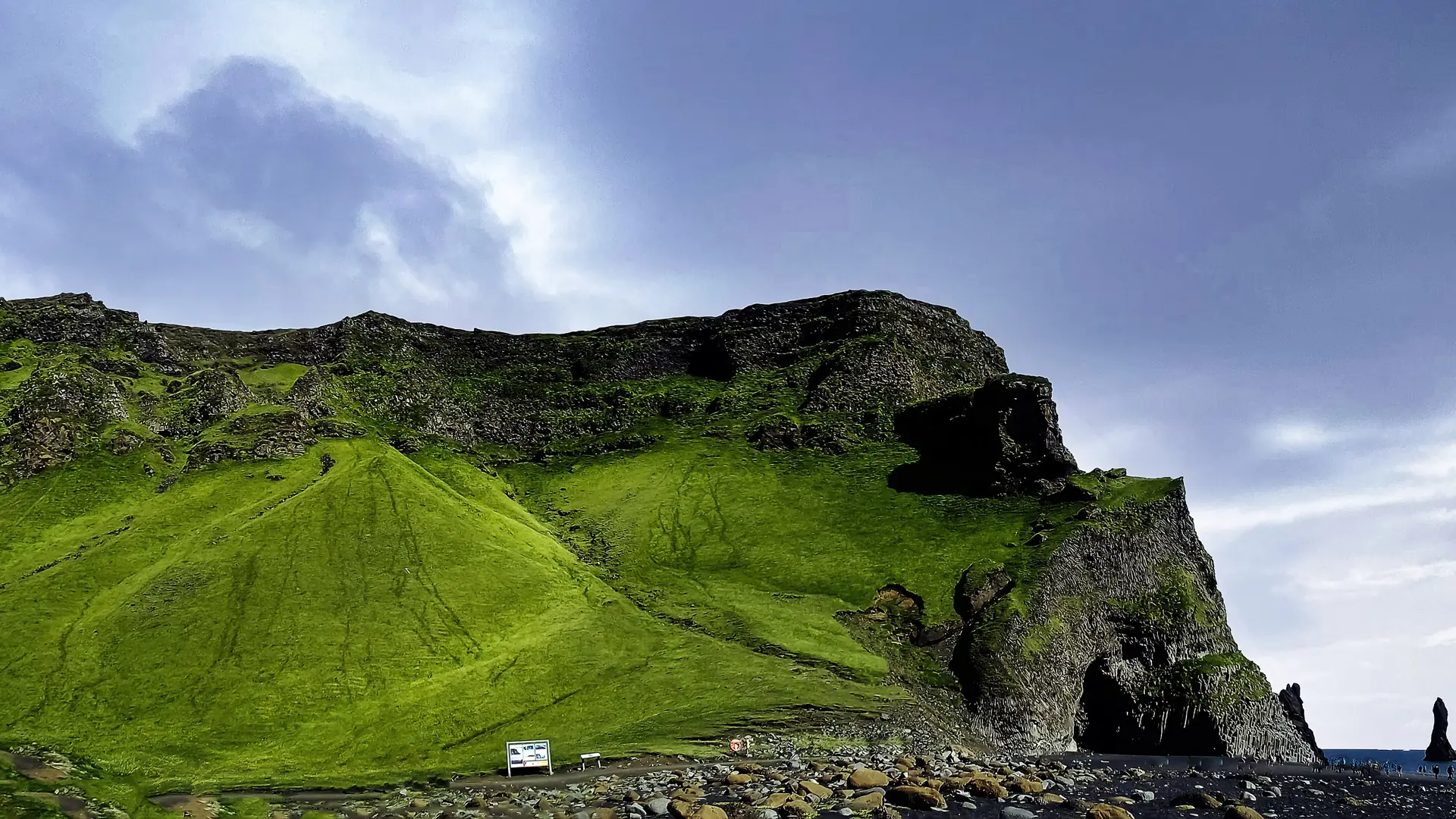
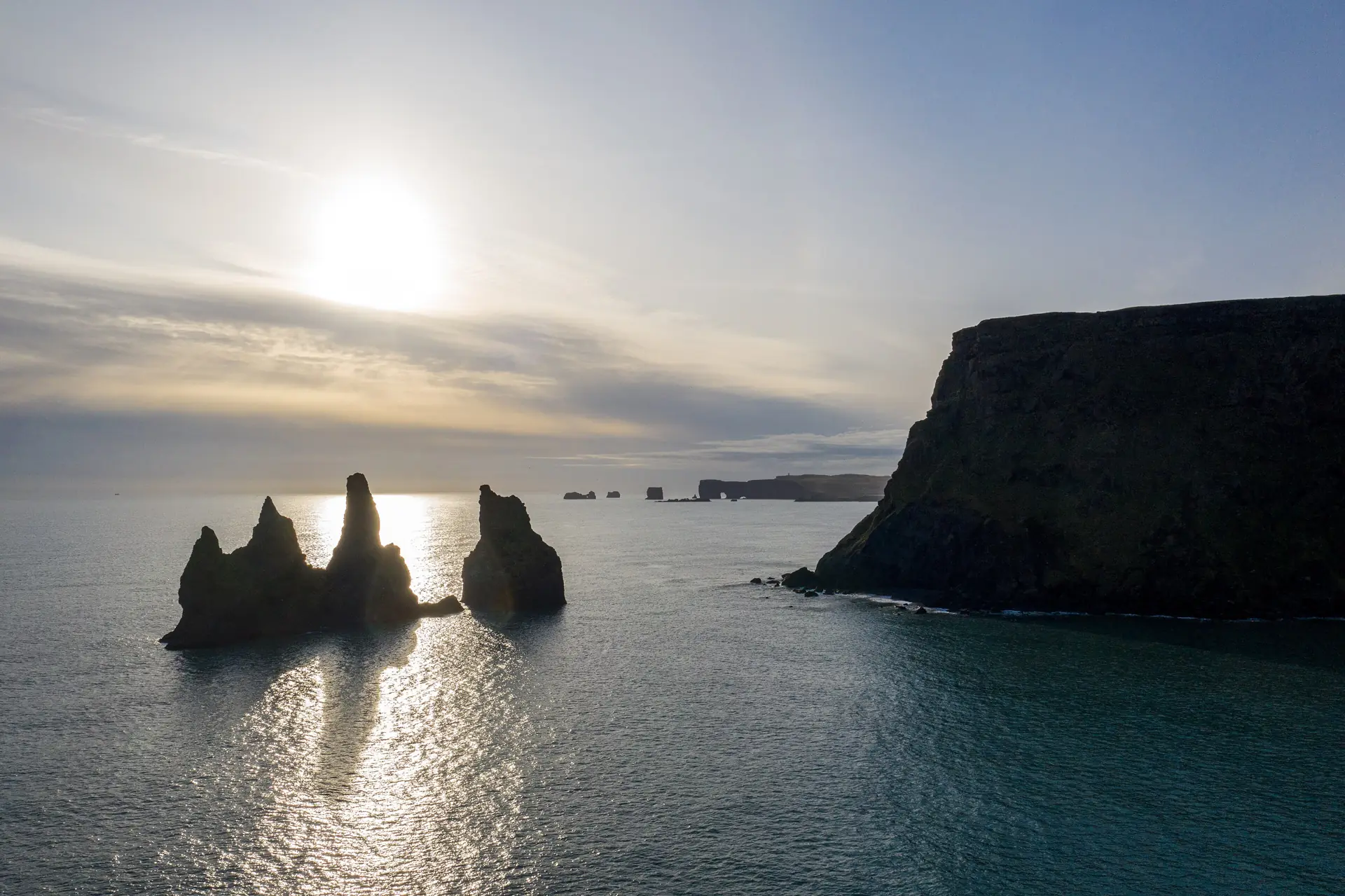
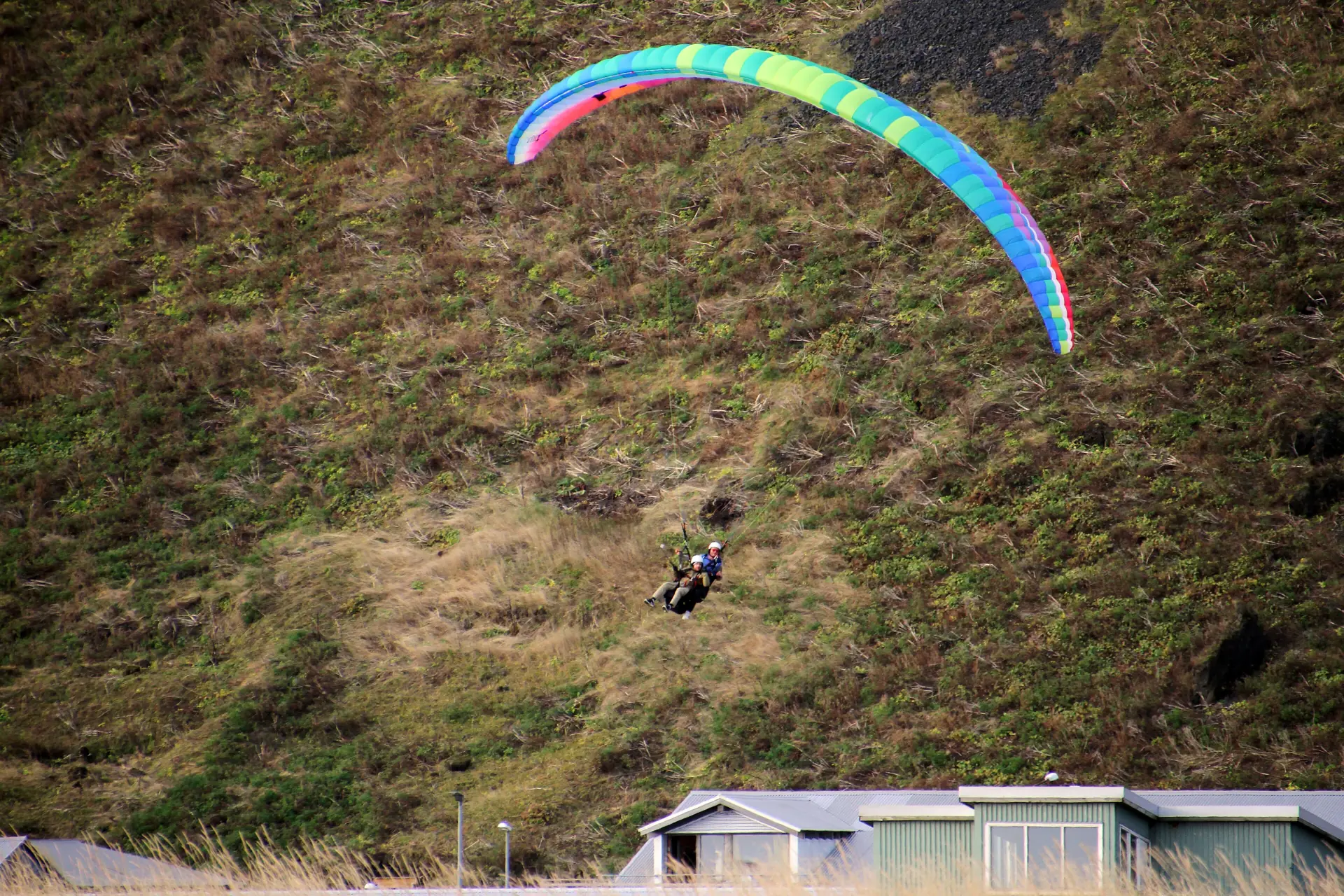
A few steps down a grass slope on top of Reynisfjall and then the mountain simply stops. Below you: three hundred and forty metres of air, a black beach, and three basalt stacks standing in the surf.
The weakest link here is the weather. Twenty reviews in total say it plainly: flights run when the wind on Reynisfjall allows, and they are moved or cancelled often. Book it early in your trip so there is a second chance later in the week.
↓ Above your pulse limit – keep falling

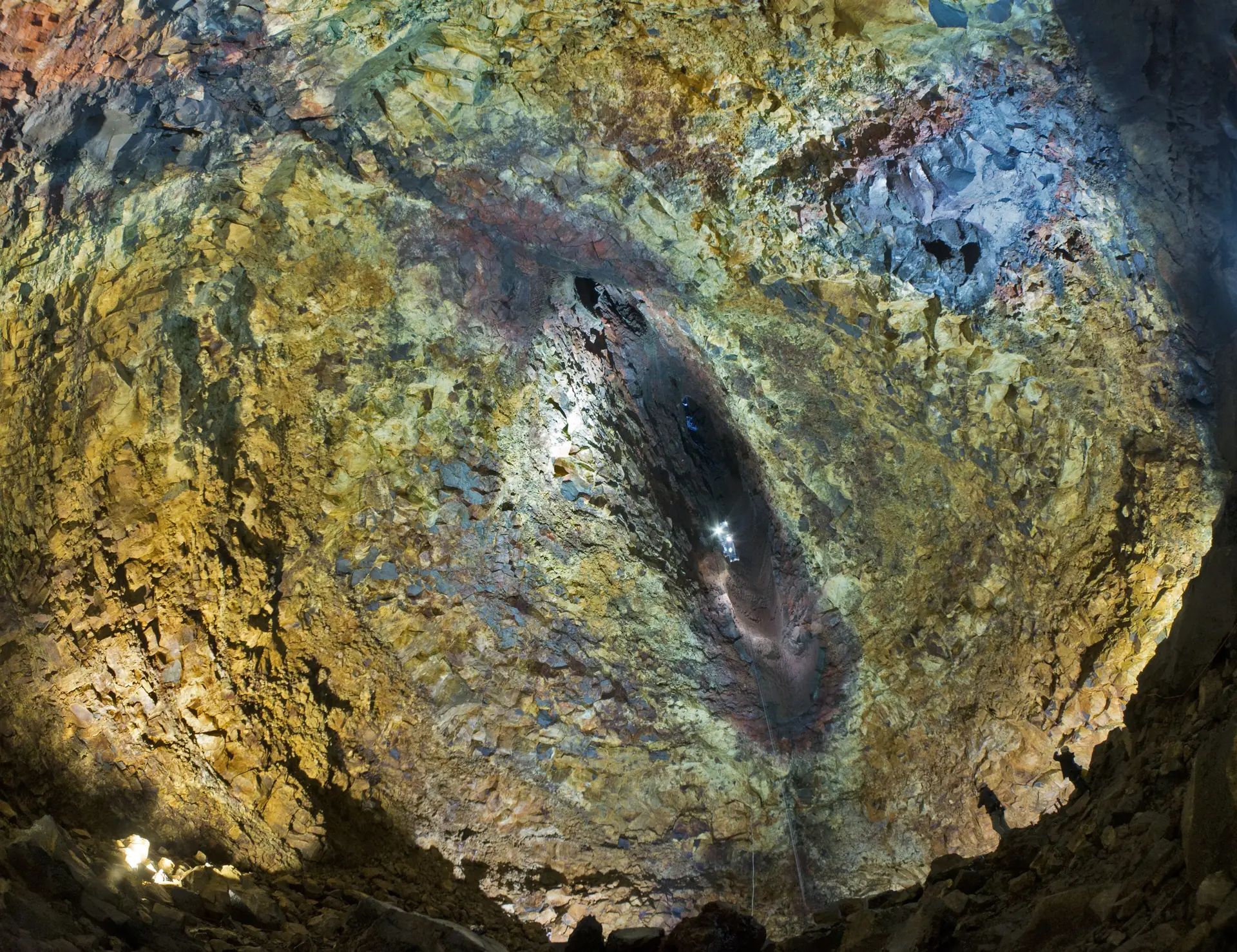
An open window-cleaner's lift takes you down through the throat of the crater. The daylight above shrinks to a coin, the walls turn red and ochre, and you stand on a floor that used to be full of molten rock.
One lift, a short season, and a price to match. At €385 this is the most expensive single stop on this site, it runs only in the summer months, and the number of people who can be lowered in a day is small. If it matters to you, book it before the flights.
↓ Above your pulse limit – keep falling
Stop 2 · Magma chamber · Þríhnúkagígur, Bláfjöll
120M INTO THE CRATER

Stop 3 · Zipline & freefall · Hveragerði
15M OF FREEFALL
First the cable: a kilometre of it, face down, fast enough that your eyes water. Then the tower, where the line simply releases you for fifteen metres before it catches – which is the part everyone talks about afterwards.
Iceland's ziplines are long, not high. Vík runs four lines up to 240 m over a canyon and Akureyri has five above a river gorge, but none of the operators – here or there – publish how high above the ground you actually fly. The fifteen metres in the fall above is the tower's freefall drop, the only figure anyone states.
↓ Above your pulse limit – keep falling

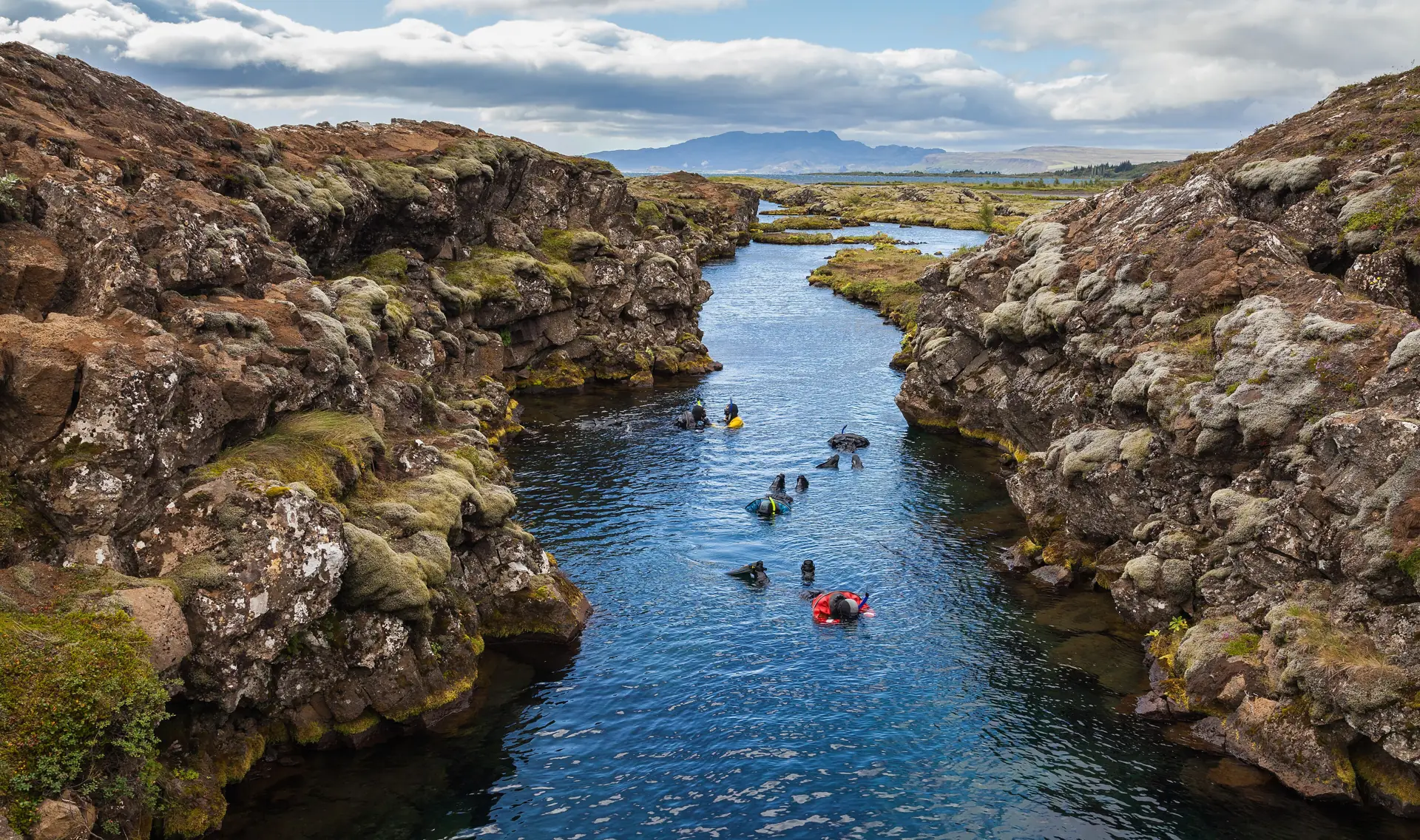
Two degrees of water, a drysuit, and a crack in the earth wide enough to swim down. One wall is North America, the other Eurasia, and you see the whole canyon: this water has been filtering through lava for a lifetime.
Cold, and strictly run. Everyone goes in a drysuit, operators require you to be able to swim and to fit the suit sizes, and the national park limits how many boats – sorry, how many groups – go in each day. Book a morning slot: the queue at the platform builds up from midday.
↓ Above your pulse limit – keep falling
Stop 4 · Snorkelling · Silfra, Þingvellir
0M · IN THE WATER
The biggest single activity in these grounds by a distance: blue ice tours on Sólheimajökull and Vatnajökull, and the winter ice caves under Katla and Breiðamerkurjökull. Crampons on, guide in front, no experience needed.
Four lines over the Grafargil canyon behind Vík, up to 240 metres long, and five above the Glerá river gorge in the middle of Akureyri. Both are longer rides than the Mega Zipline's tower – neither publishes a height, which is why they sit here rather than in the fall.
An hour of two-stroke noise on the second largest glacier in the country, usually bolted onto a Golden Circle day. The most expensive way here to travel a few kilometres, and the one people book anyway.
Raufarhólshellir runs more than a kilometre under the lava field east of Reykjavík, with the roof fallen in at intervals and ice columns in winter. Vatnshellir on Snæfellsnes goes down a spiral staircase into the dark.
The vertical version of the glacier hike: axes, crampons and a wall of blue ice at Sólheimajökull or Falljökull. Beginner sessions are short and roped from above – nobody expects you to lead.
Four thousand searches a month go on horse riding here – the breed has a gait no other horse has, the tölt, and the tours ride out over lava fields twenty minutes from the city.
Yes, at Þríhnúkagígur near Reykjavík, and nowhere else in the world on this scale: an open lift lowers you 120 metres (400 feet) into a magma chamber that drained instead of collapsing when the volcano last erupted. The tour takes about four hours with a hike in each direction and costs €385 on GetYourGuide – the single most expensive stop on this site.
The water sits between 2 and 4 °C all year, which is why every operator puts you in a drysuit with only your face exposed. In return you get the clearest fresh water anywhere: it has filtered through lava for thirty to a hundred years, and the fissure runs down to 63 metres between the North American and Eurasian plates. Three hours, from about €113.
The regular tandem flights go from Reynisfjall above Vík on the south coast – a tuff mountain 340 metres tall at its highest point, with the black beach and the Reynisdrangar stacks below. Flights last 15 to 20 minutes when the wind allows, and they are frequently moved: only twenty people have reviewed the Vík flight on GetYourGuide, which tells you how often it actually runs.
No operator says. Vík has four lines up to 240 metres long over a canyon, Akureyri has five above a river gorge, and the Mega Zipline at Hveragerði is more than a kilometre long at up to 120 km/h – but none of them publish a height above the ground. The only stated drop in the country is the Mega Zipline's freefall tower, at 15 metres, which is the number in the fall above.
Ice caves are a winter thing – roughly November to March, when the meltwater tunnels under Katla and Vatnajökull are safe to enter – and cost from about €140. Glacier hikes run all year from about €91 and give you crampon time on Sólheimajökull or Vatnajökull. If you are here in summer and want ice, walk on it; the caves you see advertised then are usually man-made tunnels.
Most of it, and some things only then. The ice caves, the snowmobiles and the northern-lights jeep tours are winter products; the glacier hikes, lava tunnels, horses and Silfra run all year; the volcano descent and the paragliding are summer only. The weather cancels more tours in Iceland than anywhere else on this site – leave slack in the plan.
More than anywhere else we have measured. On GetYourGuide (Sept 21, 2026): a lava tunnel from €62, the Mega Zipline from €66, a glacier hike from €91, Silfra snorkelling from €113, horse riding from €115, an ice cave from €140, ice climbing from €182, snowmobiling from €190, paragliding €315 and the volcano €385. The weighted average across the ground is about €166 per person.