38° 41′ S · 176° 04′ E · Sky Tower to the Kaituna gorge · Ground 14
Rotorua, Taupō & the North Island
Four and a half kilometres over the lake. This country invented the drop.
Commercial bungy started here, and it shows: the North Island sells falling the way other places sell museums. You can leave an aircraft at four and a half kilometres over a volcanic lake, step off a tower in the middle of Auckland, touch the Waikato with your hair on a 47-metre rope, and end the week going over the highest waterfall anyone is allowed to raft. Scrolling means falling. Every stop comes with real prices and an honest rating of how hard your heart will pound.
1 · the view3 · sweaty palms5 · heart in your throat
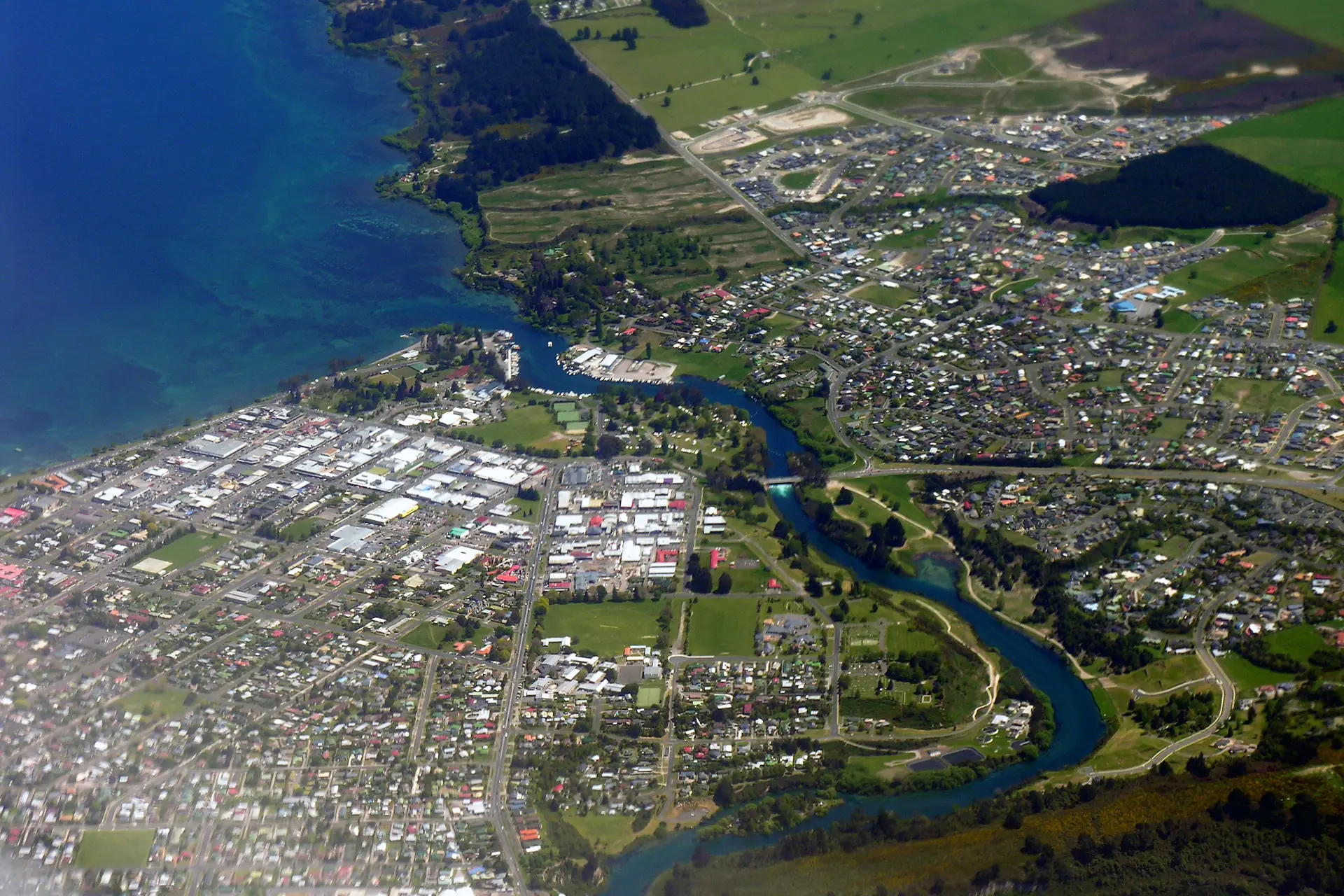
The plane spirals up over a lake that is really a caldera, until the far shore and the three volcanoes behind it fit in one window. Then the door goes and you get a full minute of falling before anything slows down.
Cheaper here than almost anywhere. A Taupō tandem costs about a third of the Palm Jumeirah jump in Dubai and less than half of Moab's, and it comes with the lake, the volcanoes and – on a clear day – both coasts at once.
↓ Above your pulse limit – keep falling
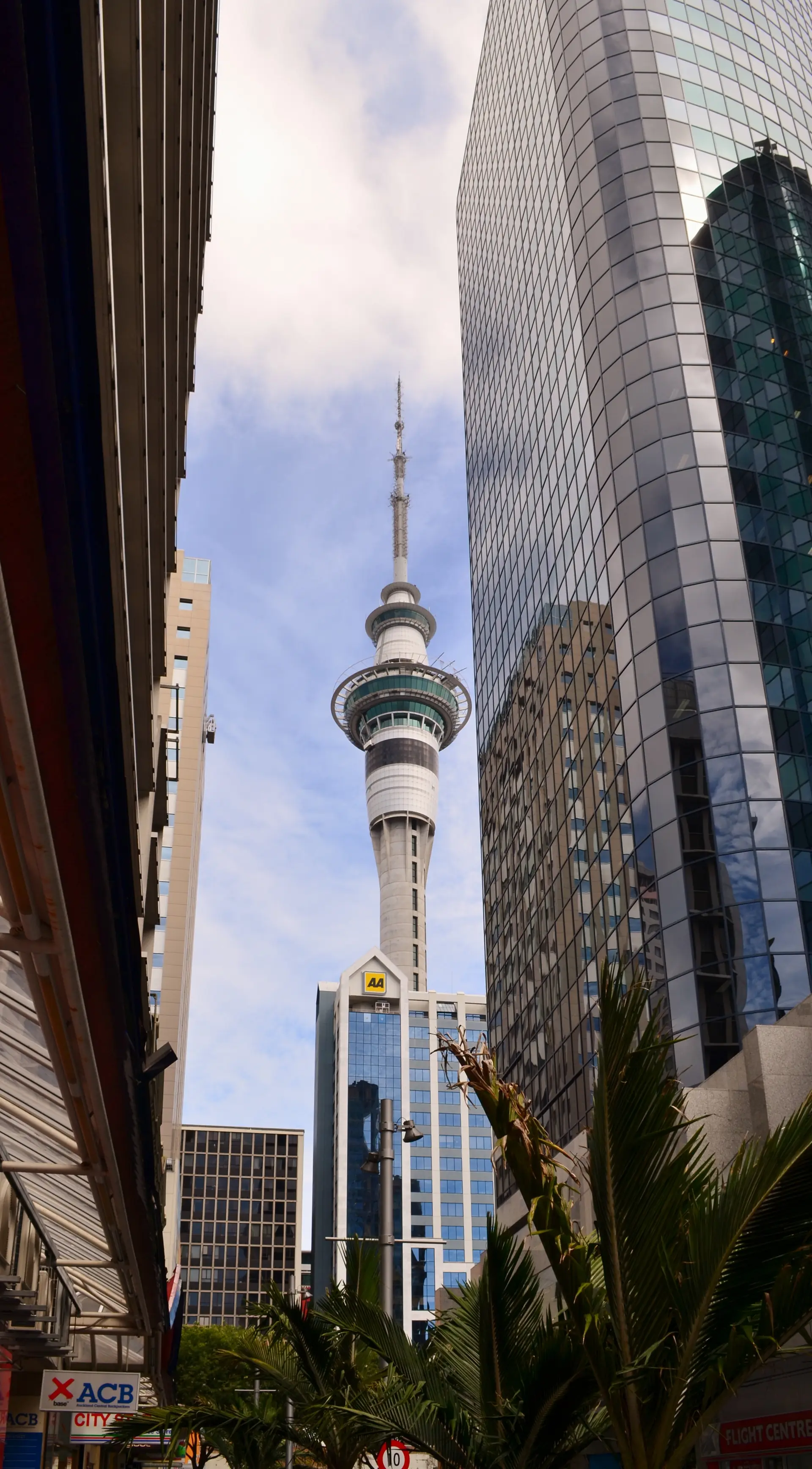
A steel platform outside the glass, the harbour a long way underneath, and a wire that will let you fall at eighty-five kilometres an hour for eleven seconds. The walk around the edge without a handrail is the other way to do it.
It is a wire, not a bungy. The SkyJump is a guided descent: you fall fast but you land on your feet on a target at the bottom, which is why the minimum age is ten. If you want the rope and the rebound, that is Taupō, one stop down.
The platform hangs off a cliff over water so blue it looks dyed. Forty-seven metres later your hands, or your whole head if you ask for it, go into the Waikato – and then the river lets you go again.
Ask for the dunk. The jump is sold either touching the water or clear of it – the touch is the point, and it costs nothing extra. Auckland's Harbour Bridge jump is lower and over the harbour instead.
↓ Above your pulse limit – keep falling
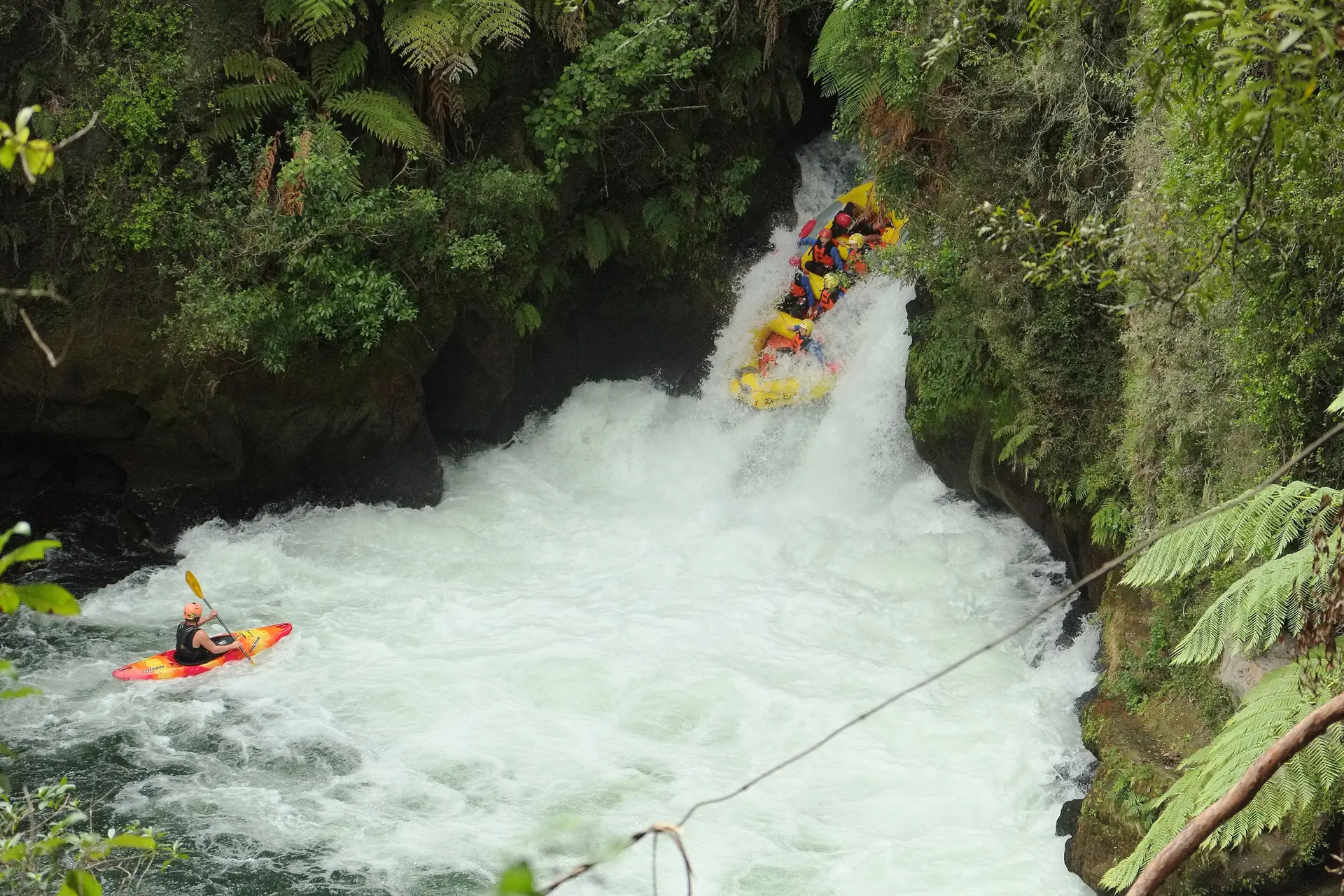
The guide lines the raft up, everyone gets down, and the nose tips over the lip of Tutea Falls. Seven metres later the boat comes up somewhere in the white, usually still the right way round.
Grade 5, and still a beginner trip. Fifteen hundred people have reviewed the cheapest of these at five stars: the run is short, warm and professionally guided, and flipping at the falls is part of the product rather than a failure of it.
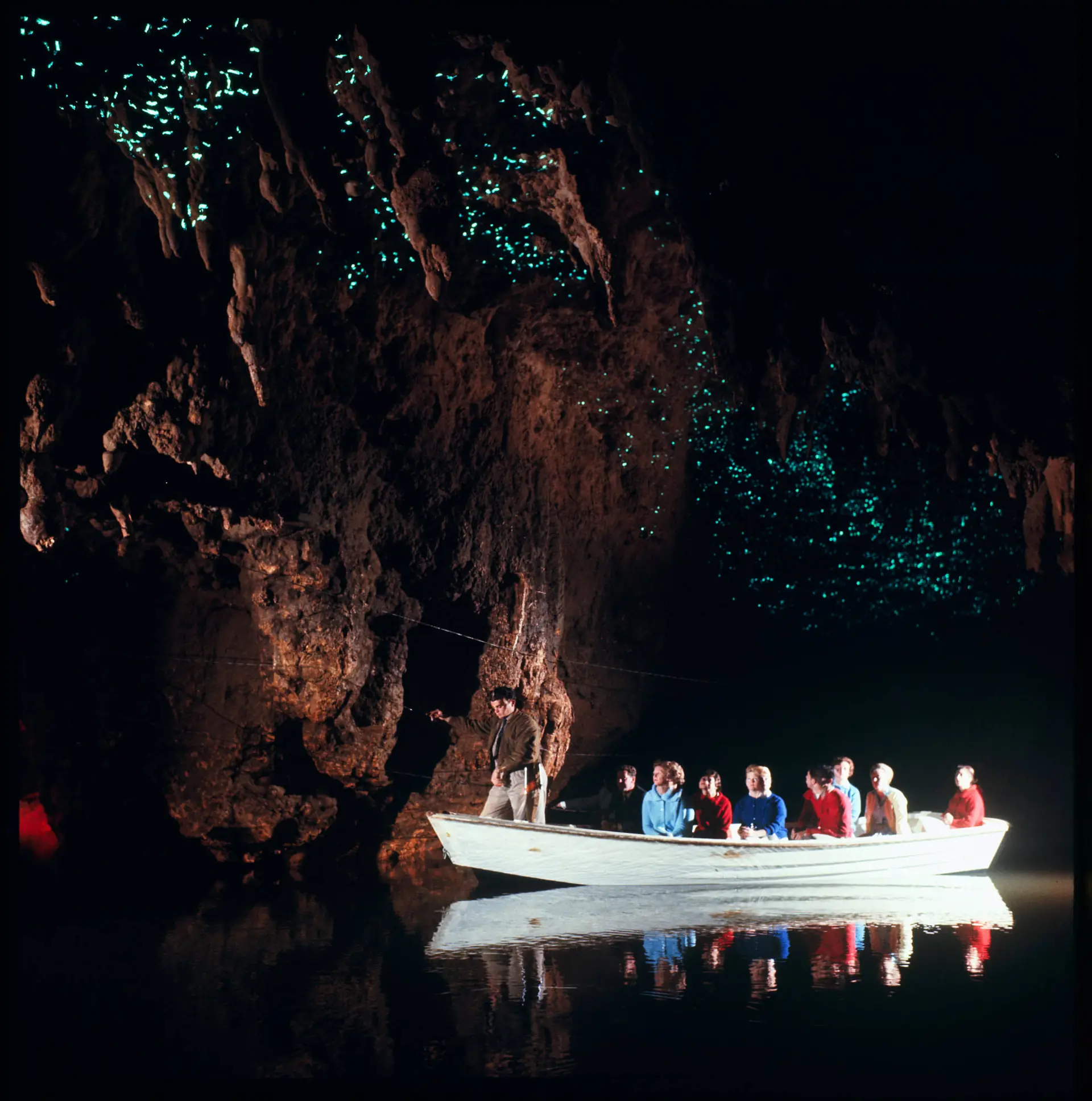
Wetsuit, a rubber ring and a headlamp, then backwards over a small waterfall into the dark. When everyone switches their lamps off, the roof of the cave turns into a sky full of green stars.
The cold is the hard part. The water sits around 16 °C and you are in it for a while; the wetsuits are thick for a reason. If you only want the glowworms without the tube, the boat tour through the Glowworm Cave is the one with 5,700 reviews.
↓ Above your pulse limit – keep falling
Touchdown. Now build your day on these grounds.
Also on these grounds
Luge and zorb: Rotorua's own inventions
Pulse 2/5
The luge was invented here and the zorb too – a gravity cart down a mountain track and a plastic ball rolled down a hill with you inside it. The luge at Skyline is sold at the gondola rather than online; the zorb you can book.
Rotorua's canopy tours run through native forest that was never logged, with swing bridges between the trees; Waitomo has a one-kilometre line above the farmland. As everywhere, the operators publish line lengths rather than heights.
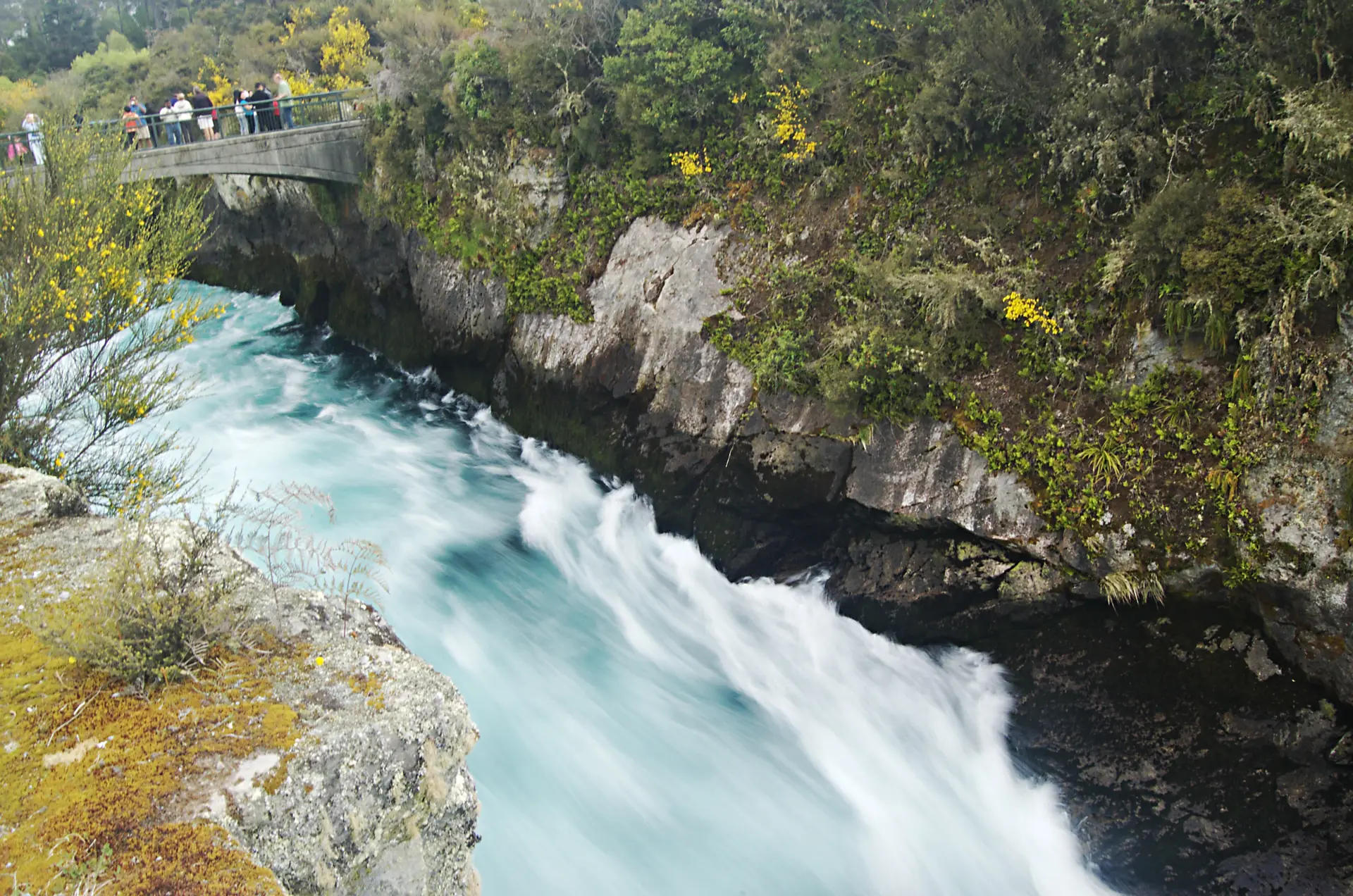
The Waikato squeezes into a eleven-metre-wide channel at Huka and comes out the other end as a solid blue rope of water. The jet boats run up to the foot of it and spin on the spot.
Same river, no raft: a body board, fins and the rapids at eye level. And in the evening, a kayak across Lake Rotoiti to a canyon wall full of glowworms.
Taupō, and it is one of the cheapest good jumps in the world: about $188 for a tandem from 15,000 feet over a lake that fills a volcanic caldera, with the Tongariro volcanoes on the horizon. The operator also sells 12,000 and 16,500 feet; from Auckland you can go to 18,000, New Zealand's highest tandem.
SkyJump or bungy?
The SkyJump off Auckland's Sky Tower is a guided wire descent – 192 metres at a controlled 85 km/h, about 11 seconds, and you land on your feet. Taupō's bungy is a rope and a rebound: 47 metres over the Waikato, with the option of touching the water. The tower is the bigger number; the rope is the bigger fright.
How high is the waterfall you raft on the Kaituna?
Tutea Falls is seven metres and it is the highest commercially rafted waterfall in the world. The run has 14 rapids, is graded 5, takes about 50 minutes on the water and starts at $64 – the best value for money of anything on this site. Minimum age is 13.
What is black water rafting?
Floating through a cave on an inner tube. At Waitomo the original tour takes you into Ruakuri in a wetsuit, over a small waterfall backwards, and then through a chamber where the glowworms light the ceiling. Three hours, about $110. The water is roughly 16 °C, which is the part people underestimate.
Can you book the Rotorua luge online?
Not through GetYourGuide – around 1,700 people a month search for it and there is no ticket for sale there; Skyline Rotorua sells the gondola-and-luge combos at the mountain. The zorb, also invented in Rotorua, you can book in advance from about $54.
How much of this can you do in one trip?
All of it, in about a week. Auckland to Waitomo is roughly two hours, Waitomo to Rotorua two more, Rotorua to Taupō one. The classic loop is Auckland – Waitomo – Rotorua – Taupō and back, and the four stops in the fall above sit exactly on it.
When is the season?
Everything here runs all year. The southern summer, December to February, is warmest and busiest; the rafting and caving are wetsuit sports regardless, and the skydive cancels for cloud rather than cold. Winter jumps often have the clearest air of the year.